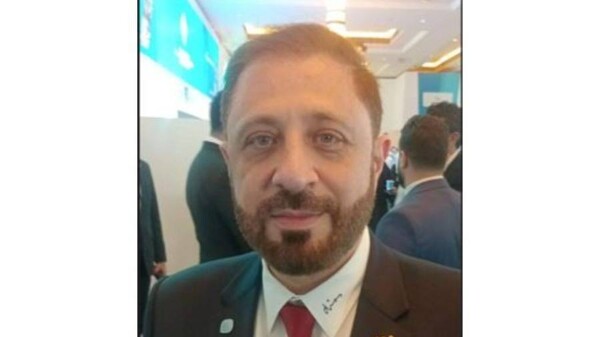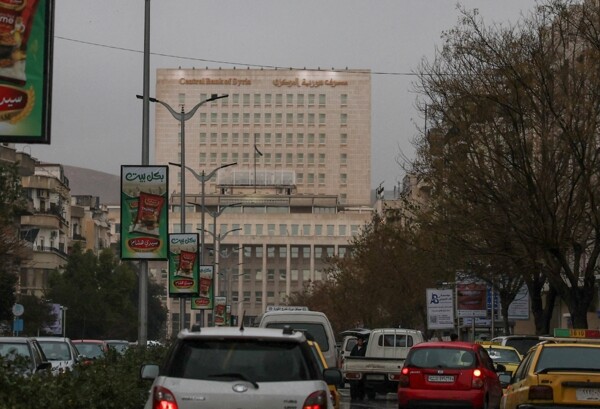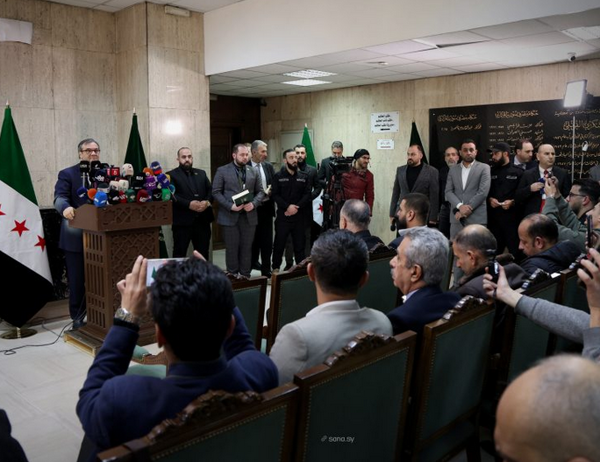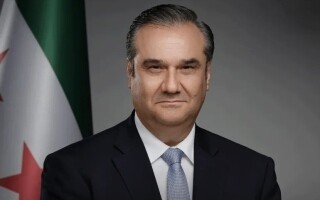
The Governor of the Central Bank of Syria, Abdelkader al-Hasriya, confirmed that Syria is not seeking loans or entering into financing programs with the International Monetary Fund (IMF), stressing that everything that has happened so far falls within the framework of technical consultations and obtaining grants only, which ensures the independence of the state's monetary and financial decision-making. Al-Hasriya told "Al-Emarat Al-Youm" on the sidelines of the World Government Summit in Dubai that discussions with the IMF began last April in Washington, and were later continued through multiple consultations. He explained that the recent meetings held on the sidelines of the World Government Summit focused on exploring prospects for technical cooperation and whether there is room to expand joint work in the coming years. He added: "We are not looking for financial facilities from the IMF, nor are we aspiring to any financing programs or loans, and all we have received so far are grants." He noted that this approach "gives us full independence in drawing up our monetary and economic policies." Al-Hasriya pointed out that Syria inherited a "fragile country with all its institutions" as a result of years of war, but within just a few months, stability in the exchange rate was achieved, along with measures that included changing the currency and lifting sanctions. He considered that what was achieved is the result of "a clear will, a studied vision, and continuous consultation with various parties." He explained that the Central Bank is now in an advanced stage of institutional reform, revealing the preparation of a strategic plan for the coming years, which includes five main pillars, five enablers, 18 strategic objectives, and 75 reform projects and initiatives, targeting the reconstruction and enhancement of the efficiency of the financial sector. Regarding the file of salaries and wages, al-Hasriya stressed that reviewing salaries has become imperative in light of the major imbalance that has affected the wage structure due to the war. He explained that the Syrian pound has lost about 99% of its value, which directly reflected on the purchasing power of citizens. He said: "We are fully aware of the magnitude of the imbalance in salaries, and for this reason, the review and correction process has begun. Last year saw a salary increase, and this process will continue until we reach an appropriate salary level." He confirmed that work is underway on new expected measures in the salaries file during the current year. He added that economic reform cannot succeed without maintaining job competencies, noting that the restructuring of salaries aims to achieve greater justice, motivate employees, and keep competencies within state institutions, while simultaneously combating corruption and enhancing transparency. Al-Hasriya affirmed that the path of economic reform is ongoing, and that the year 2026 holds "good news for all Syrians" as a result of the reform steps that are currently being worked on.