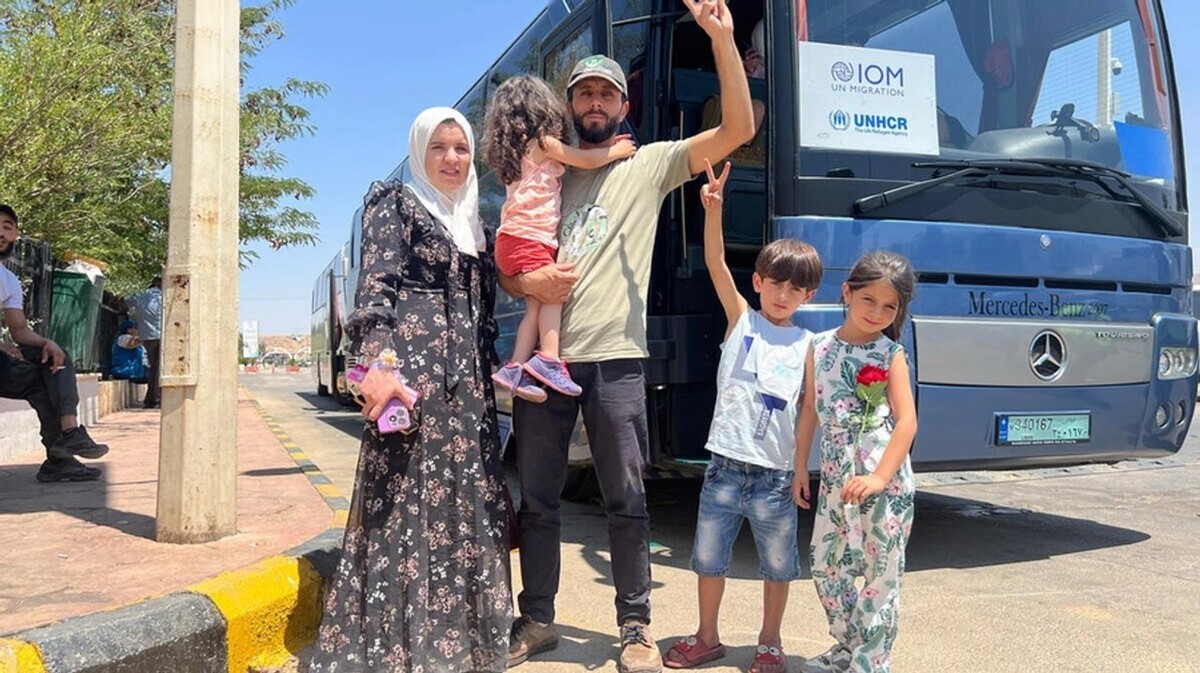
Over 3 million displaced Syrians have been able to return to their homes one year after the fall of the Assad regime. According to data obtained by Noticias Argentinas, this marks a critical step in the healing process for Syria. The next phase, following this extraordinary window of hope for peace and stability, is to urgently secure greater international support to maintain this momentum. Since December 2024, over 1.2 million Syrians have returned voluntarily from neighboring countries, while more than 1.9 million internally displaced persons (IDPs) have gone back to their places of origin. However, the security situation in Syria remains unstable in certain areas. After 14 years of war, entire neighborhoods lie in ruins, including schools, hospitals, and water systems. Electricity, clean water, and healthcare remain irregular. Livelihood opportunities are limited, and local markets lack supplies. Many returnees lack civil documents, which hinders access to property rights and essential services. Unexploded ordnance continues to threaten lives, with 577 people having died from this cause since the beginning of the year. To support the returns, since the start of the year, more than 36,000 households have received cash assistance upon returning to Syria, and nearly 30,000 people have been transported from the border to their destinations. Teams from the UN Refugee Agency (UNHCR) are rehabilitating damaged homes and providing relief items. To date, nearly 3,000 families have received housing repair support; 84,000 families have received essential items like blankets, mattresses, and winter clothing; and nearly 30,000 families have received assistance to cope with the winter. To address legal and documentation needs, the UNHCR team in Syria offers services through community centers and mobile teams to help returnees reclaim their properties and access services. Efforts are also underway to prevent gender-based violence, protect children, and provide psychosocial support. Civil registries and land registry offices have been rehabilitated, and vocational training initiatives have been supported to foster recovery and self-sufficiency, including the creation of small businesses. Forced displacement was one of the deepest wounds inflicted by the conflict, and the return is essential to end years of suffering and ensure stabilization. "This is a unique opportunity to help end one of the world's worst humanitarian crises," said UN High Commissioner for Refugees Filippo Grandi. "But without urgent global backing, this window of hope will close. The Syrians are ready to rebuild; the question is whether the world is ready to help them do so," he warned. As an increasing number of Syrians return home, NGOs have begun to facilitate voluntary returns from neighboring countries to ensure they are dignified and sustainable. Support includes cash assistance, transportation, and counseling on the necessary civil documentation to facilitate reintegration. Activities in neighboring countries have intensified since January 2025 to respond to the growing demand for voluntary returns. At least 170,000 Syrians returned from Jordan to Syria since December 8, 2024. In Jordan, assistance was provided in over 24,000 cases, including counseling, information, transportation, and cash aid. In Lebanon, support for refugees had been concluded for some 379,000 Syrians by the end of November, based on confirmed or presumed returns. Of these, 45,000 received counseling, repatriation forms, and cash grants for their return from UNHCR, and more than 2,600 have also benefited from transport organized by IOM. The voluntary repatriation program is implemented in close cooperation with the authorities. In Egypt, nearly 28,000 individual cases were closed since December 8, 2024. In Türkiye, around 560,000 Syrians have voluntarily returned over the past year. Some 420,000 returns were monitored in coordination with the authorities. Refugees received counseling, information on conditions in areas of origin, and money for transport. Support with civil documentation was also provided before departure, and financial support was offered upon arrival. Despite these efforts, UNHCR's appeal of $1.5 billion for the Syria situation in 2025 has only received 33% of the funds, leaving millions of people without adequate shelter, basic services, or support for the impending winter. Approximately 4.5 million Syrian refugees remain in neighboring countries, the majority living below the poverty line. They need continued support, as do the host countries.